Name:
Date:
Grade: 2
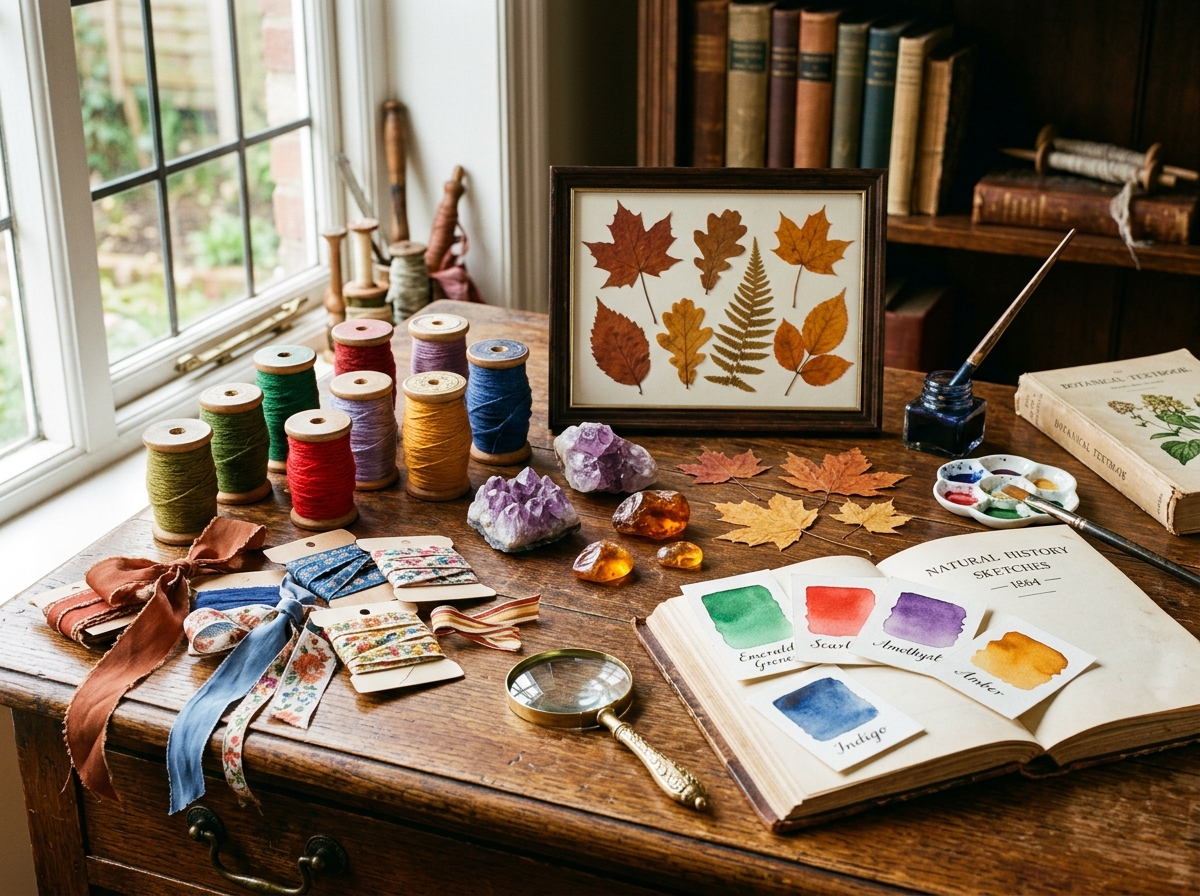
Vocabulary Expansion • Specificity of Color
“Learn to know the colors named below, in clothing, animals, fruits, leaves, sunsets, rainbows, etc. You will thus be able to describe more fully the things you may see.”
Language Power: Using precise names of shades (scarlet, emerald, lavender, amber) brings our writing to vivid, sparkling life!
1
The Seven Color Families & Their Nuanced Shades
Study the classic shade names from the lesson text:
Yellow:
lemon, straw, sulphur, gold
Red:
pink, garnet, scarlet, crimson
Blue:
plum, sky-blue, indigo, marine
Green:
olive, emerald, tea-green, bottle-green
Purple:
lilac, lavender, violet, amethyst
Orange:
buff, salmon, cream, amber
Brown:
chocolate, russet, chestnut, tan
1. Mineral Shades: Which shades are named after precious jewels or stones?
2. Plant & Flower Shades: Name two shades named after blossoming flowers:
2
Upgrade Ordinary Sentences with Precise Shades
Replace the ordinary, plain color word with a rich, specific shade from the bank:
1. Autumn Leaves: The autumn maple leaves turned bright red. → The maple leaves turned
2. Royal Robe: The king wore a rich purple velvet robe. → The king wore a rich robe.
3. Ocean Waves: The deep blue sea sparkled in the morning. → The deep sea sparkled.
4. Forest Moss: Soft green moss grew upon the old stone. → Soft moss grew on the stone.
3
Original Descriptive Sentences (Ribbons & Nature)
Write two descriptive sentences describing items in your classroom or home (ribbons, fruit, leaves, clothing) using at least two nuanced shade names:
Sentence 1:
Sentence 2: